
Recent Highlights:
BR-bodies facilitate adaptive responses and survival during copper stress in Caulobacter crescentus
(Journal of Biological Chemistry, 2025 - DOI: 10.1016/j.jbc.2025.110648)
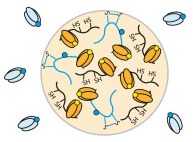
In this paper, the Childers group investigated how Caulobacter crescentus survives toxic copper exposure. They found that bacterial ribonucleoprotein bodies (BR-bodies), biomolecular condensates that organize RNA decay enzymes, are essential for survival under high copper stress. In collaboration with the Saxena group, EPR spectroscopy revealed that Cu(II) binds the central BR-body protein RNase E through coordination with histidine residues. Biochemical assays further showed that a high density of weak copper-binding sites within BR-bodies acts as a copper buffer, preventing mismetallation of key associated enzymes. This work is important because it reveals a new mechanism by which bacteria adapt to heavy metal stress, providing insights that may inform strategies to control bacterial survival in environmental and industrial settings.
Difunctional oxidatively cleavable alkenyl boronates: application to cellular peroxide sensing from a fluorophore–quencher pair
(Chemical Communications, 2025 - DOI:10.1039/D5CC00090D)
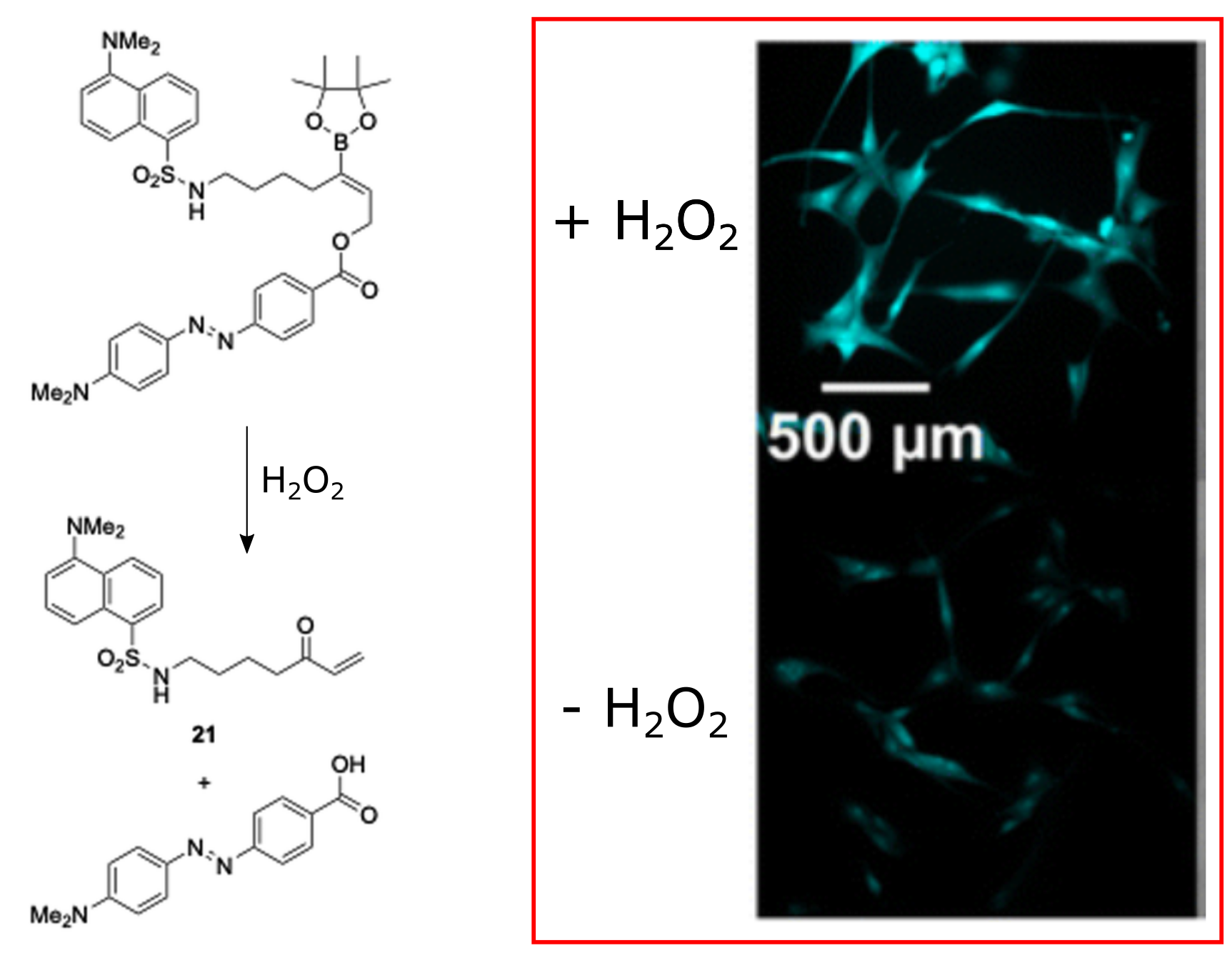
In this paper, the Deiters and Floreancig groups developed new difunctional alkenyl boronates that can incorporate a cell-directing group and release a chemical “cargo” when exposed to hydrogen peroxide. They used these linkers to build fluorescent probes that light up in oxidatively stressed cells, which are present in numerous disease states. The compounds showed fast and selective cleavage reactions and produced strong fluorescence in cancer cells but not in healthy cells unless extra peroxide was added. This work is important because it offers a versatile platform for designing drug delivery systems and diagnostic tools that respond specifically to cellular oxidative stress.
Low-Energy Isomers of the Magic Number H+(H2O)21 Cluster
(The Journal of Physical Chemistry A, 2025 - DOI: 10.1021/acs.jpca.5c01977)
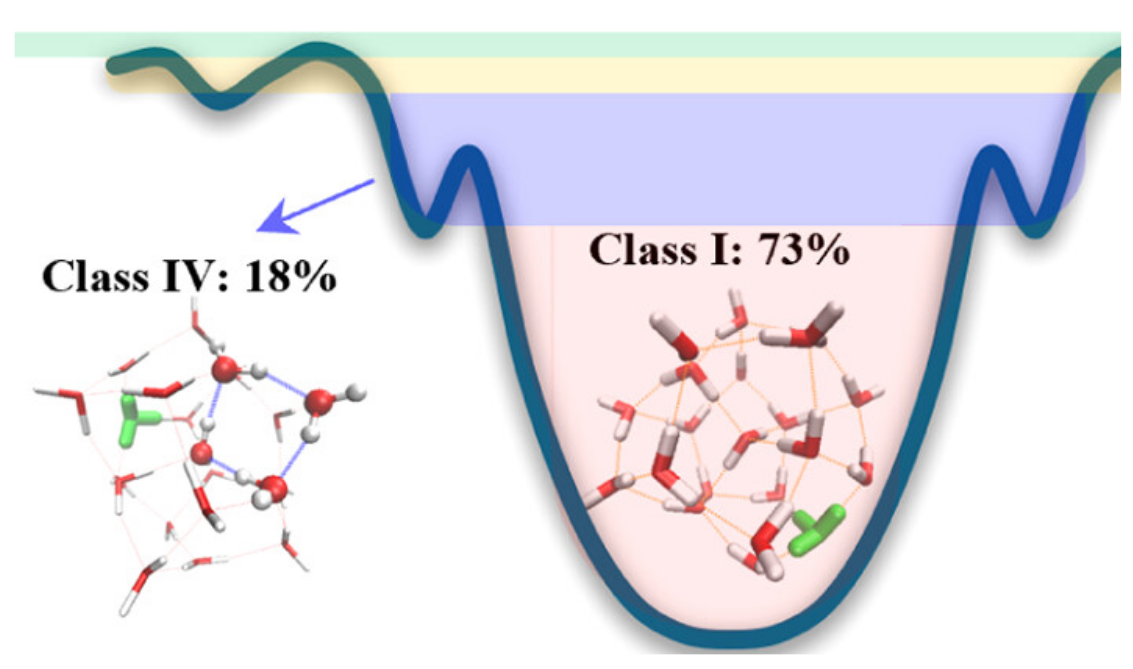
In this paper, the Jordan group used advanced electronic structure calculations to identify and compare thirteen low-energy forms (“isomers”) of the protonated water cluster H⁺(H₂O)₂₁. They found that the most stable structures share a pentagonal dodecahedral water cage with the extra proton on the surface and one water molecule trapped inside. A slightly higher-energy form, where the central water participates in a four-membered ring instead of only five-membered ones, becomes increasingly populated at higher temperatures. This work is important because it helps explain how structural changes in nanoscale water clusters influence their vibrational spectra and stability—key to understanding proton transport and hydrogen bonding in water.
Detection of opioids and their metabolites in sweat by carbon nanotube FET sensor array
(npj Biosensing, 2025 - DOI: 10.1038/s44328-025-00051-0)
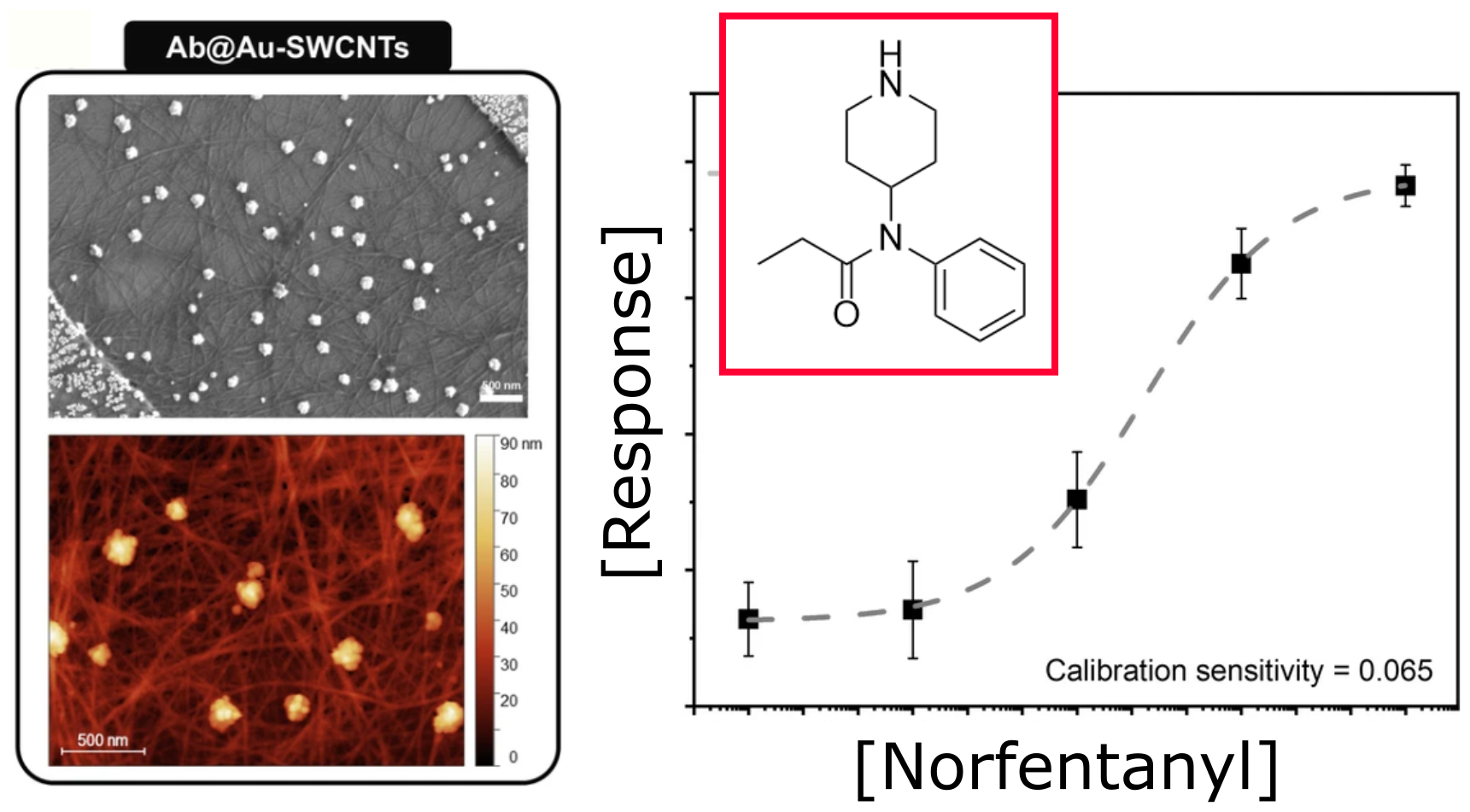
In this paper, the Star group developed a carbon nanotube–based field-effect transistor (FET) sensor that can rapidly detect opioids and their metabolites, such as morphine, norfentanyl, and 6-monoacetylmorphine, in human sweat. The researchers demonstrated that their antibody-functionalized sensors achieved very high sensitivity, detecting norfentanyl at concentrations as low as 34 picograms per milliliter. They also created an automated sensor array to test multiple opioids simultaneously and adapted the technology into a portable device for real-world use. This work is important because it could enable fast, noninvasive, and reliable on-site testing to help monitor opioid exposure and address the ongoing opioid crisis.
Molecular Design for Optically Induced Magnetization: Targeting Excited State Orbital Degeneracy in Tungsten(V) Complexes
(Journal of the American Chemical Society, 2025 - DOI: 10.1021/jacs.5c03783)
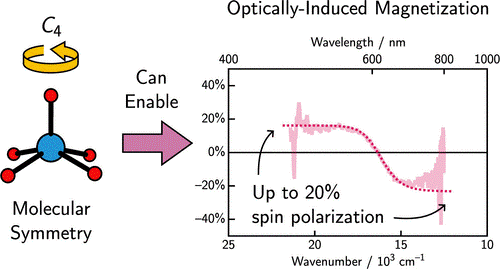
In this paper, the Transue and Saxena groups develop a design strategy for molecules that can show optically induced magnetization (OIM), a promising nonthermal method for generating spin polarization in quantum systems. They synthesize a series of tungsten(V) chalcogenide complexes that exhibit strong magnetic circular dichroism (MCD) signals that could enable up to 20% spin polarization when excited with circularly polarized light. These molecules also display longer spin relaxation times and minimal magnetic anisotropy compared to previous systems, both promising features for quantum information applications. This work is interesting because it broadens the design rules for molecular qubits, enabling greater control over spin behavior through molecular architecture.
Nanoscale Hydrophobicity of Transport Barriers in the Nuclear Pore Complex as Compared with the Liquid/Liquid Interface by Scanning Electrochemical Microscopy
(Analytical Chemistry, 2025 - DOI: 10.1021/acs.analchem.4c04861)
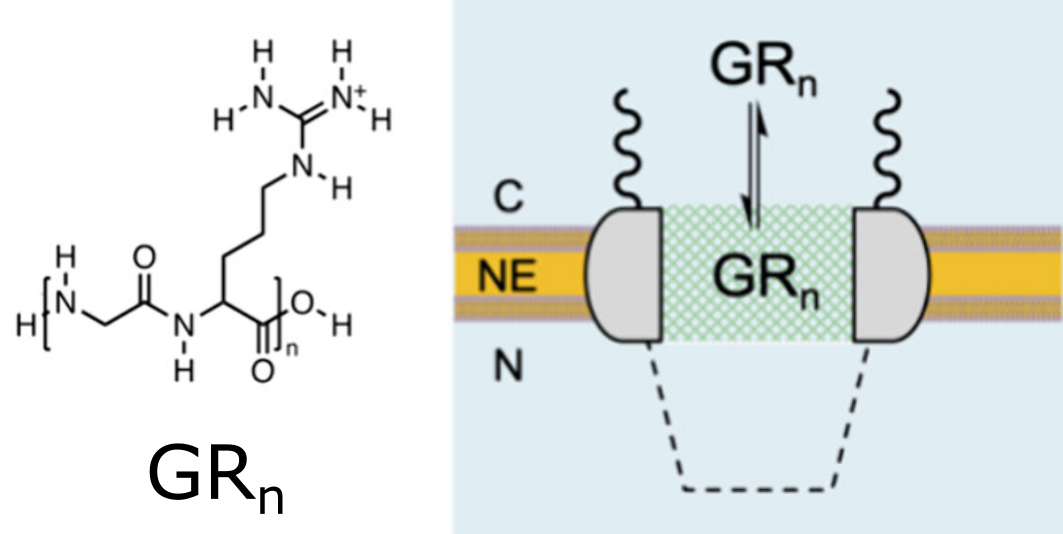
In this paper, the Amemiya group used scanning electrochemical microscopy to directly measure how hydrophobic the nanoscale transport barriers inside the nuclear pore complex (NPC) are. By testing how glycine–arginine (GR) peptide repeats of different lengths interacted with these barriers, they showed that larger, more hydrophobic GR sequences bind more strongly and linger longer in the NPC, confirming that the barriers rely on hydrophobic interactions. Their measurements also revealed that the NPC’s hydrophobic environment closely resembles that of a liquid–liquid interface, suggesting a new model system for studying such biological condensates. This work is important because it provides quantitative insight into how molecular size and hydrophobicity affect nuclear transport, informing the design of safer and more effective genetic therapeutics.
